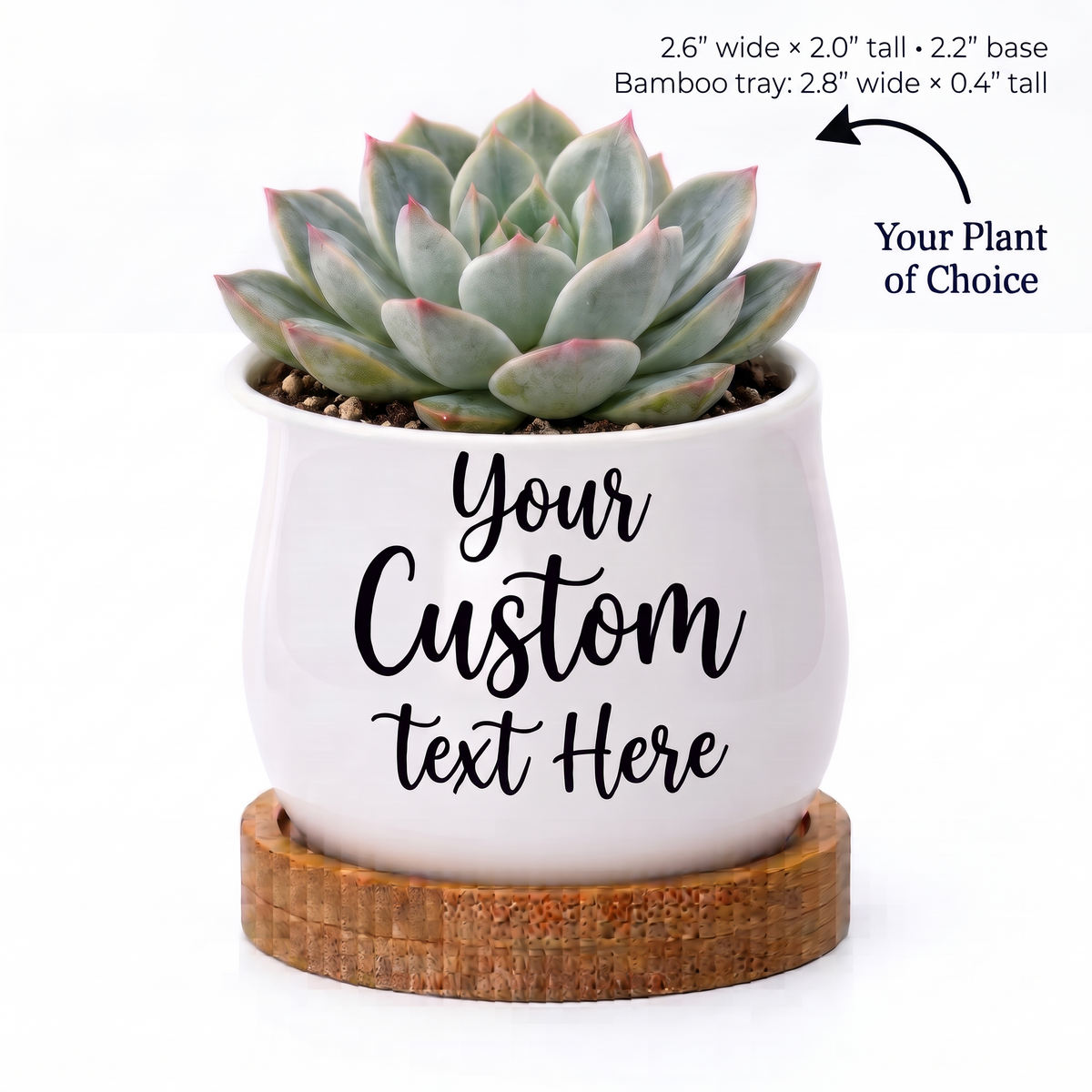


Sempervivum 'Oscularis'
Couldn't load pickup availability
-
![]() Sempervivum 'Oscularis' is a frost hardy succulent from the Crassulaceae family, native to the mountainous regions of Europe and western Asia where it grows in rocky alpine terrain. As a hens and chicks succulent, it spreads naturally by producing offsets.
 'Oscularis' forms tight, geometric rosettes in emerald green with rosy-pink edges and flushes that deepen in bright light and cooler temperatures. The thick, pointed leaves have a smooth, slightly waxy texture arranged in that classic symmetrical pattern. It clusters outward steadily, creating a dense carpet of rosettes across containers and garden beds.
 Each individual rosette blooms once before dying, but the surrounding offsets keep the colony going. The mother rosette sends up a tall flower stalk typically in summer, producing star-shaped blooms. 'Oscularis' requires a nighttime temperature drop to trigger flowering, which makes outdoor growing or a cool winter rest especially beneficial.
 It grows well on balcony exposure, handling wind and rain without trouble, and stays outdoors well into autumn. You can leave it up to ten days without water. It is non-toxic to cats and dogs, and it works in rock gardens, troughs, green roofs, and mixed container arrangements.
-
 Sempervivum 'Oscularis' grows well in partial to full sun, needing at least four to six hours of direct sunlight daily.
 Water it deeply but infrequently, allowing soil to dry completely between waterings, roughly every ten to fourteen days.
 'Oscularis' prefers fast-draining, gritty soil such as cactus mix blended with perlite or coarse sand at a 1:1 ratio.
 It handles a wide range from around 25°F up to 80°F, showing impressive frost tolerance for a succulent.
![]() 'Oscularis' is a moderate grower requiring minimal fertilizing, benefiting from one light, balanced feed in early spring at most.
 It is hardy in USDA zones 4 through 9. It grows outdoors year-round in Montana, North Dakota, South Dakota, Minnesota, Wisconsin, Michigan, Wyoming, Idaho, Colorado, Utah, Nebraska, Iowa, Illinois, Indiana, Ohio, Pennsylvania, New York, Vermont, New Hampshire, Maine, Massachusetts, Connecticut, Rhode Island, New Jersey, Delaware, Maryland, Virginia, West Virginia, Kentucky, Tennessee, Missouri, Kansas, Oklahoma, Arkansas, North Carolina, South Carolina, Georgia, Alabama, Mississippi, Louisiana, Texas, New Mexico, Arizona, Nevada, Oregon, Washington, and California.
Perfect For Every Occasion: wedding favor, bridal shower favor, housewarming, Mother's Day, teacher appreciation, event giveaway
What This Plant Symbolizes: resilience, endurance, growth, good luck
A Thoughtful Gift For: a plant-loving friend, mom or mother-in-law, a coworker or boss, green-thumbed grandparents, teachers and mentors
-
Q: Is Sempervivum 'Oscularis' pet friendly?
A: It is non-toxic and safe for cats and dogs.
Q: What window direction works best for indoor growth?
A: Sempervivum 'Oscularis' needs at least four to six hours of direct sun daily; a south or west-facing window is best. Intense afternoon rays can occasionally scorch the leaves indoors, so rotate the pot for even growth.
Q: How does 'Oscularis' propagate?
A: Separate the small offsets, called chicks, that cluster around the mother rosette and replant them in gritty, well-draining soil.
Q: How big does it get?
A: Individual rosettes of 'Oscularis' typically reach two to four inches in diameter, but it spreads outward as a colony over time.
Q: Is 'Oscularis' truly frost hardy?
A: It tolerates temperatures as low as roughly negative 30°F and survives outdoors through winter in most temperate climates across zones 4 through 9.
Q: Why isn't my plant flowering indoors?
A: 'Oscularis' requires cool nighttime temperatures to trigger blooming. This is easier to achieve outdoors or during a cold winter rest period indoors.