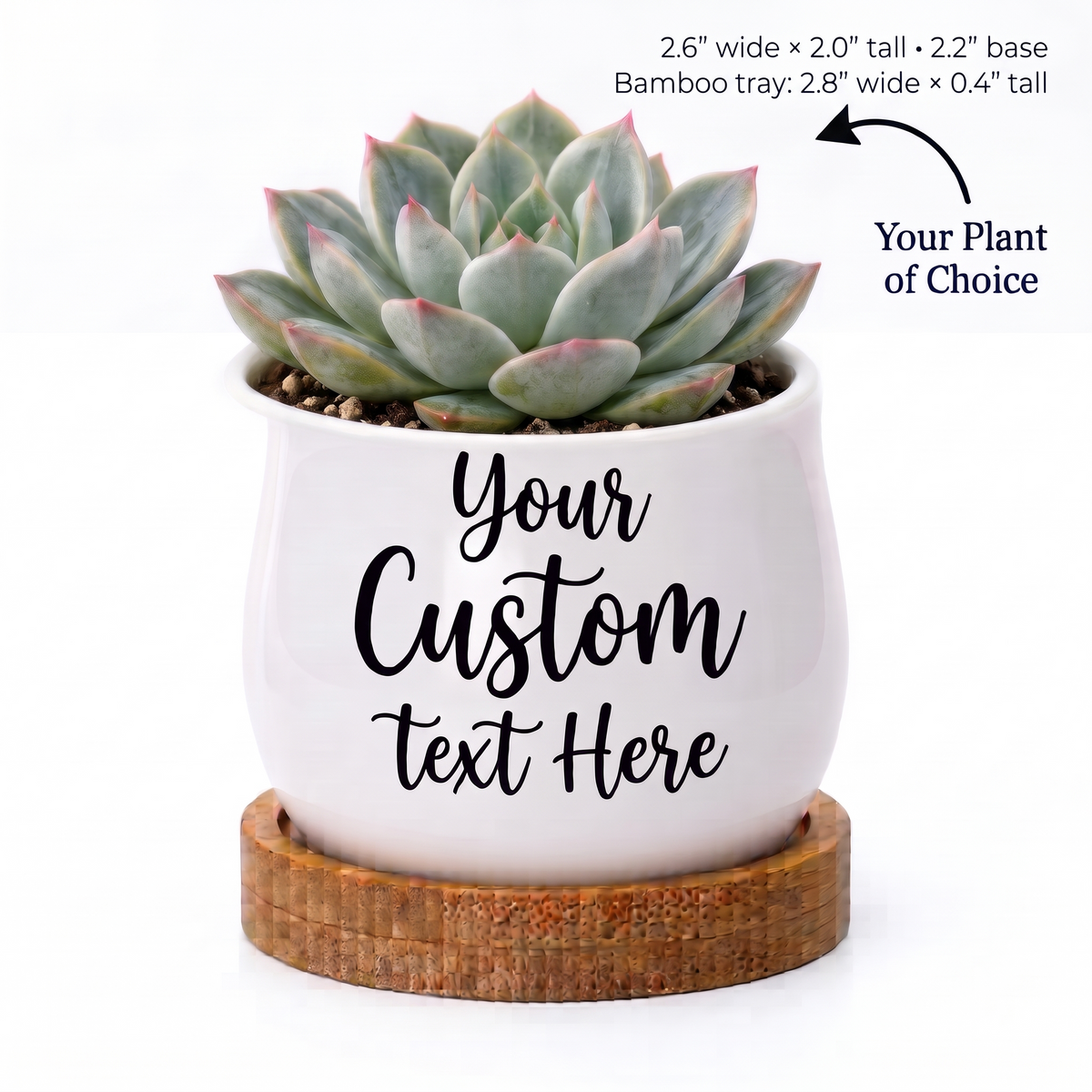


Sempervivum 'Coconut Crystal'
Couldn't load pickup availability
-
![]() Sempervivum 'Coconut Crystal' is a frost-hardy succulent from the Crassulaceae family, native to the rocky mountain regions of Europe and Asia where it survives brutal winters in well-drained alpine soils. This cold-hardy hen and chicks has compact two-tone foliage and is among beginner-friendly sempervivums available today.
 'Coconut Crystal' forms tight, symmetrical rosettes with fleshy pointed leaves that combine lime green and creamy white tones, often blushing with soft color at the tips. It grows in a clustering, clumping habit, spreading steadily by producing small offsets called chicks around the central hen, creating a dense carpet over time. The rosettes are compact and geometric.
 Like all sempervivums, it is monocarpic, meaning the main rosette blooms once and then dies, though the surrounding chicks carry on the colony without interruption. A nighttime temperature drop triggers the bloom cycle in outdoor plants during autumn.
 'Coconut Crystal' is a drought-tolerant succulent that grows well on neglect, suited for rock gardens, alpine troughs, container arrangements, and sunny balconies. It tolerates dry heated indoor air and handles drafty spots. Move it outside in summer and leave it through autumn and frost. The plant is pet-friendly and safe for homes with cats and dogs. It propagates effortlessly by twisting off the small chicks, letting them callous for a day, then pressing them onto fresh gritty soil.
-
 Sempervivum 'Coconut Crystal' grows well in partial to full sun, needing at least four to six hours of direct light daily.
 Water it deeply but infrequently, allowing soil to dry completely between waterings, roughly every ten to fourteen days.
 'Coconut Crystal' grows well in fast-draining gritty mix, such as cactus soil blended with perlite or coarse sand at a 1:1 ratio.
 It handles temperatures from -30°F up through warm summers, making it a frost-tolerant succulent.
![]() 'Coconut Crystal' is a moderate spreader that rarely needs pruning and requires only a light feed once in spring if desired.
 It is hardy in USDA zones 3 through 8, tolerating frost well below 0°F. It grows outdoors year-round in Minnesota, Wisconsin, Michigan, North Dakota, South Dakota, Montana, Wyoming, Colorado, Idaho, Oregon, Washington, Maine, Vermont, New Hampshire, New York, Pennsylvania, Ohio, Indiana, Illinois, Iowa, Nebraska, Kansas, Missouri, Kentucky, Virginia, West Virginia, Maryland, Connecticut, Rhode Island, Massachusetts, New Jersey, Delaware, North Carolina, Tennessee, Arkansas, and Utah.
Perfect For Every Occasion: wedding favor, bridal shower favor, housewarming, Mother's Day, thank-you gift, event giveaway
What This Plant Symbolizes: resilience, endurance, protection, growth
A Thoughtful Gift For: mom or mother-in-law, a plant-loving friend, a coworker or boss, green-thumbed grandparents, neighbors and friends
-
Q: Is Sempervivum 'Coconut Crystal' safe for pets?
A: It is non-toxic and safe for cats and dogs.
Q: What should I do if the leaves turn yellow?
A: Sempervivum 'Coconut Crystal' yellows almost always from overwatering or poorly draining soil. Cut back on water and check that roots are not sitting wet.
Q: How do I propagate 'Coconut Crystal'?
A: Gently twist off the small offset chicks, let them callous for a day, then press them onto fresh gritty soil.
Q: Can it stay outside year-round?
A: In USDA zones 3 through 8, 'Coconut Crystal' lives outdoors permanently, though it appreciates cover from prolonged heavy rain to prevent root rot.
Q: Does 'Coconut Crystal' need a lot of light?
A: Insufficient light causes rosettes to stretch and lose their compact structure; place it where it receives at least four to six hours of direct sun daily.
Q: How long can it go without water?
A: You can leave it up to ten days without water. Water less frequently in winter.