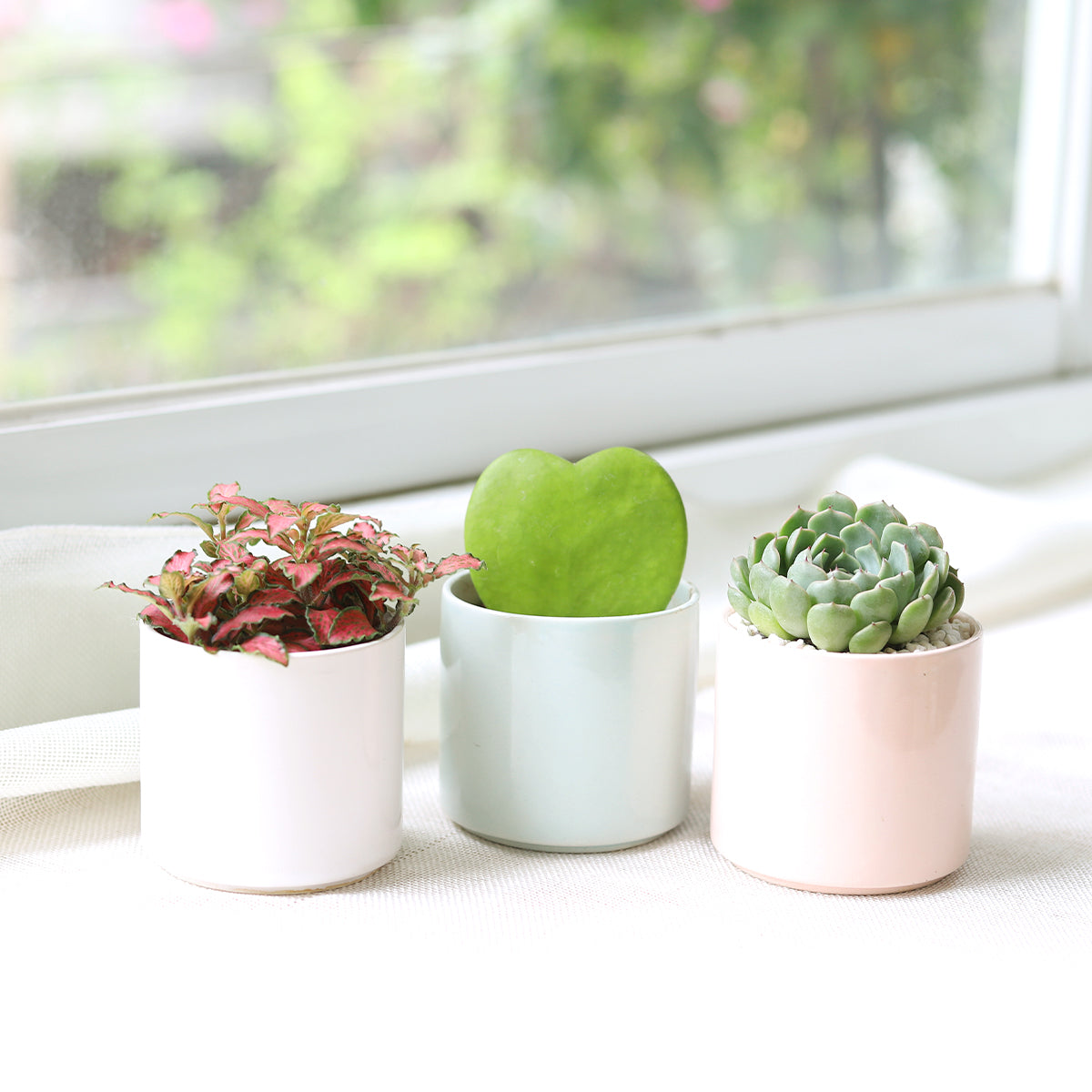


Red Nerve Plant Fittonia
Couldn't load pickup availability
-
![]() Fittonia, also called Red Nerve Plant, is a tropical perennial in the Acanthaceae family, native to the rainforests of South America, particularly Peru. It grows naturally on the forest floor beneath dense canopy, where humidity is high and light filters through layers of foliage.
 The leaves are small and oval, covered in a dense web of red veins that run across a deep green surface. Each leaf sits flat and broad, giving the plant a low, spreading form that stays compact. The contrast between the red veined leaves and the green base is consistent across the foliage, with no fading toward the edges.
 Fittonia produces small, tubular white or pale yellow flowers on slender spikes, though blooms are infrequent indoors and often removed to keep energy in the leaves. It is fully pet-friendly, with no toxicity reported for cats or dogs. Fittonia also filters indoor air, including formaldehyde and other common household toxins.
 Terrarium setups suit it well because the enclosed environment holds the moisture levels it needs. It also does well near a kitchen, where ambient humidity stays higher than in other rooms. Keep it away from air conditioning vents and heating units, as dry moving air causes the leaves to curl and brown at the edges. Rotate the pot periodically so all sides receive even light exposure, and shelter it from rain if moved to a covered outdoor spot in summer, as heavy rain can damage the leaves.
-
 Red Nerve Plant Fittonia grows well under bright indirect light, including standard office LED lighting, away from south-facing windows where leaves scorch.
 Water it thoroughly when the top inch of soil feels dry, roughly every seven to ten days, adjusting for season and humidity.
 Fittonia does best in a well-draining, peat-based or coco coir mix with added perlite to prevent waterlogging around the roots.
 It prefers temperatures between 60°F and 80°F and drops below 55°F cause stress and leaf damage quickly.
![]() Fittonia grows at a moderate pace and benefits from a balanced liquid fertilizer applied monthly during spring and summer only.
 It is hardy in USDA zones 11 and 12, where frost does not occur and temperatures stay reliably above 50°F year-round. It grows outdoors in Hawaii and the southernmost parts of Florida, where humidity and warmth match its rainforest origins. In all other states, it performs as an indoor tropical houseplant.
Perfect For Every Occasion: housewarming, teacher appreciation, get-well gift, thank-you gift, new baby, congratulations, office party favor
What This Plant Symbolizes: resilience, good luck, boldness and intellect, connection and sensitivity
A Thoughtful Gift For: someone who appreciates feng shui and positive energy, a plant lover seeking low-light beauty, pet owners with cats or dogs, someone starting a new chapter, a person who loves striking foliage
-
Q: Does Red Nerve Plant Fittonia show any signs when it needs water?
A: It wilts noticeably when the soil has dried out, with leaves drooping flat. Once watered, it usually perks back up within a few hours.
Q: Which window direction works best for this plant?
A: Red Nerve Plant Fittonia does well near an east or north-facing window, positioned within a few feet of the glass. A south or west window is too intense and causes pale, scorched patches on the leaves.
Q: Is Fittonia safe for cats and dogs?
A: Yes, it is non-toxic to cats and dogs and listed as pet-friendly by major veterinary references.
Q: How sensitive is this plant to being moved or repotted?
A: Fittonia reacts visibly to changes in location, often dropping or curling leaves for a few days after moving. Keep it in one stable spot and limit relocations to avoid repeated stress.
Q: Can Red Nerve Plant grow in a terrarium?
A: Yes, enclosed terrariums hold the high humidity it needs and protect it from the dry air that causes leaf browning. It stays compact enough to work well in small glass containers.
Q: How do I keep humidity high enough for this plant indoors?
A: Red Nerve Plant does well on a pebble tray filled with water, near a kitchen where cooking adds moisture to the air, or grouped with other plants. Avoid placing it near AC units or heaters, where dry air circulation dries the leaves quickly.