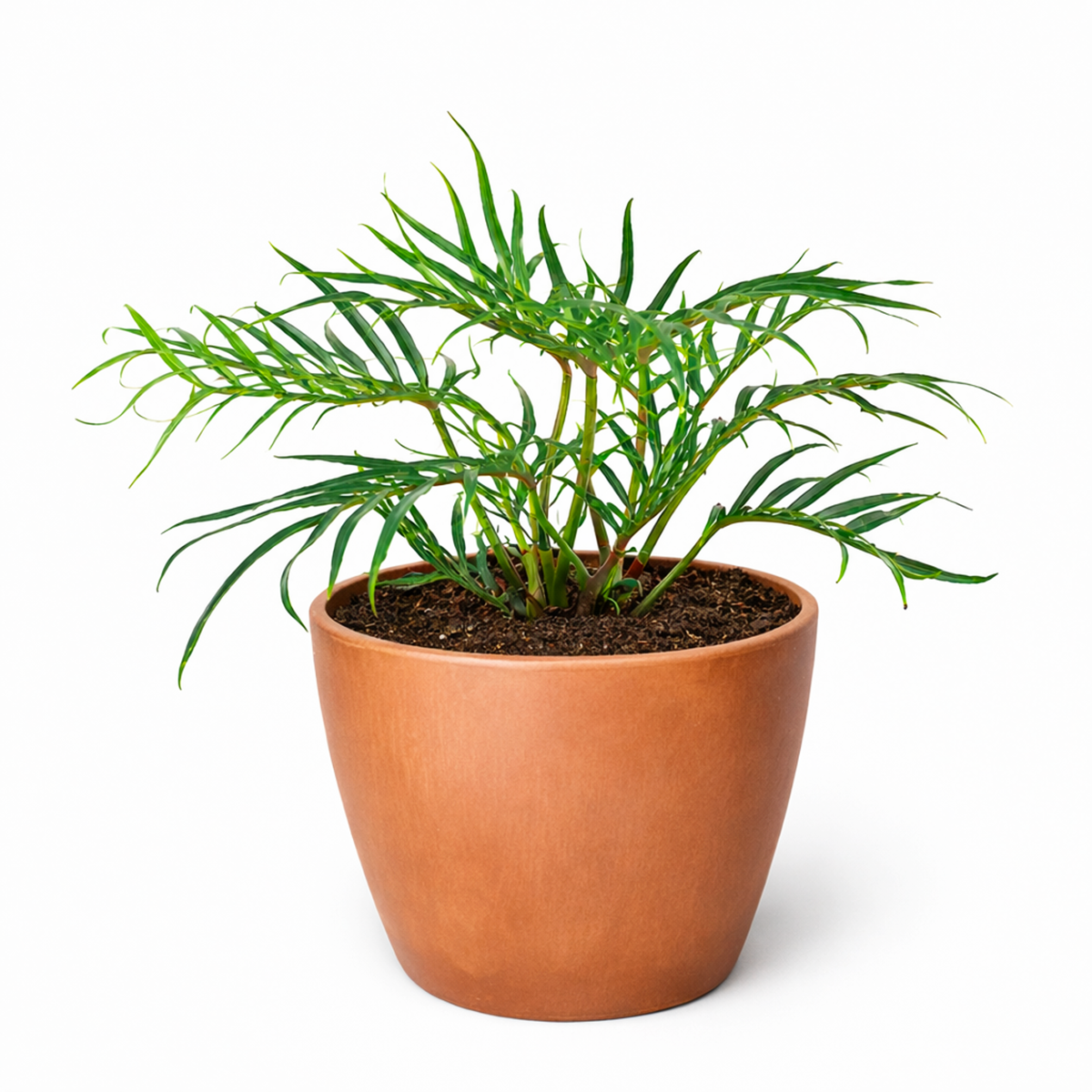


Philodendron 'Tortum'
Couldn't load pickup availability
-
![]() Philodendron 'Tortum' is a rare aroid houseplant native to the tropical rainforests of Brazil and Bolivia, where it climbs through the understory canopy as part of the Araceae family. This fernleaf philodendron has become sought after by collectors for its deeply dissected foliage that distinguishes it from nearly every other houseplant.
 Each leaf is divided into narrow, finger-like lobes that radiate outward like a fern frond crossed with a snowflake. Philodendron Tortum carries glossy green leaves on slender stems, creating an open, airy silhouette with a skeletal structure. New leaves unfurl from a central growing point, each one revealing a slightly more complex shape as the plant matures.
 Flowering on it grown indoors is exceptionally rare and largely undocumented under typical home conditions. Collectors watch for new leaf emergence, which unfolds progressively more intricate lobing patterns as the plant develops.
 It purifies indoor air by filtering formaldehyde and other toxins. Position it near a kitchen or humid bathroom where it grows well in the gentle moisture. Cats, dogs, and other pets must be kept away entirely, as contact with the sap causes skin and paw irritation. Rotate it a quarter turn every week or two so all sides receive equal light exposure. Avoid moving it frequently, as it can be sensitive to sudden environmental changes.
-
 Philodendron 'Tortum' grows well in bright indirect light and adapts well to consistent office LED setups.
 Water it every 7 to 10 days, allowing the top inch of soil to dry between waterings.
 Philodendron Tortum does best in a chunky, well-draining aroid mix of peat or coco coir, perlite, and orchid bark for excellent root aeration.
 It prefers temperatures between 65 and 85°F and must be protected from temperatures below 50°F.
![]() Philodendron Tortum is a moderate to fast grower during warm months and benefits from a balanced liquid fertilizer applied monthly in spring and summer.
 It is hardy in USDA zones 9 through 11, where temperatures rarely drop below 25–30°F, though even brief frost damages it. It grows outdoors year-round in Florida, Hawaii, southern California, coastal Texas, Arizona, Louisiana, Mississippi, Alabama, Georgia, and South Carolina. It also grows outside seasonally in Nevada, Oregon, and coastal zones of North Carolina, though it must move indoors before the first autumn chill.
Perfect For Every Occasion: housewarming, corporate or client gift, plant collector gift, office party favor, tropical enthusiast gift, unique home decor accent, interior designer appreciation
What This Plant Symbolizes: health and abundance, architectural elegance, growth and resilience, connection and strength
A Thoughtful Gift For: a serious plant collector, someone who loves unusual houseplants, a design-forward friend, an office plant enthusiast, your favorite coworker or boss
-
Q: How often should I water Philodendron 'Tortum'?
A: Water every 7 to 10 days with the top inch of soil drying between waterings. Watch for visible wilting as a sign that watering is needed.
Q: Is it safe around cats and dogs?
A: Philodendron 'Tortum' must be kept completely out of reach of pets. The sap causes skin and paw irritation, and ingesting the leaves is harmful.
Q: How do I propagate Philodendron Tortum?
A: Take a stem cutting with at least one node and place it in water or moist sphagnum moss until roots develop. Warm temperatures and high humidity speed up rooting.
Q: Why are the leaves turning yellow?
A: Yellow leaves on Philodendron Tortum most often result from overwatering, low humidity, or cold drafts from air conditioning or heating vents. Check soil moisture and move it away from direct airflow.
Q: What humidity does Philodendron Tortum need?
A: It prefers humidity levels above 60%. A humidifier or pebble tray with water helps in drier indoor environments, and positioning it near the kitchen provides consistent moisture.
Q: Can I grow this plant outdoors?
A: Philodendron Tortum grows outdoors year-round only in USDA zones 9–11, including Florida, Hawaii, southern California, coastal Texas, Arizona, Louisiana, Mississippi, Alabama, Georgia, and South Carolina. It can grow seasonally in warmer parts of Nevada, Oregon, and coastal North Carolina.