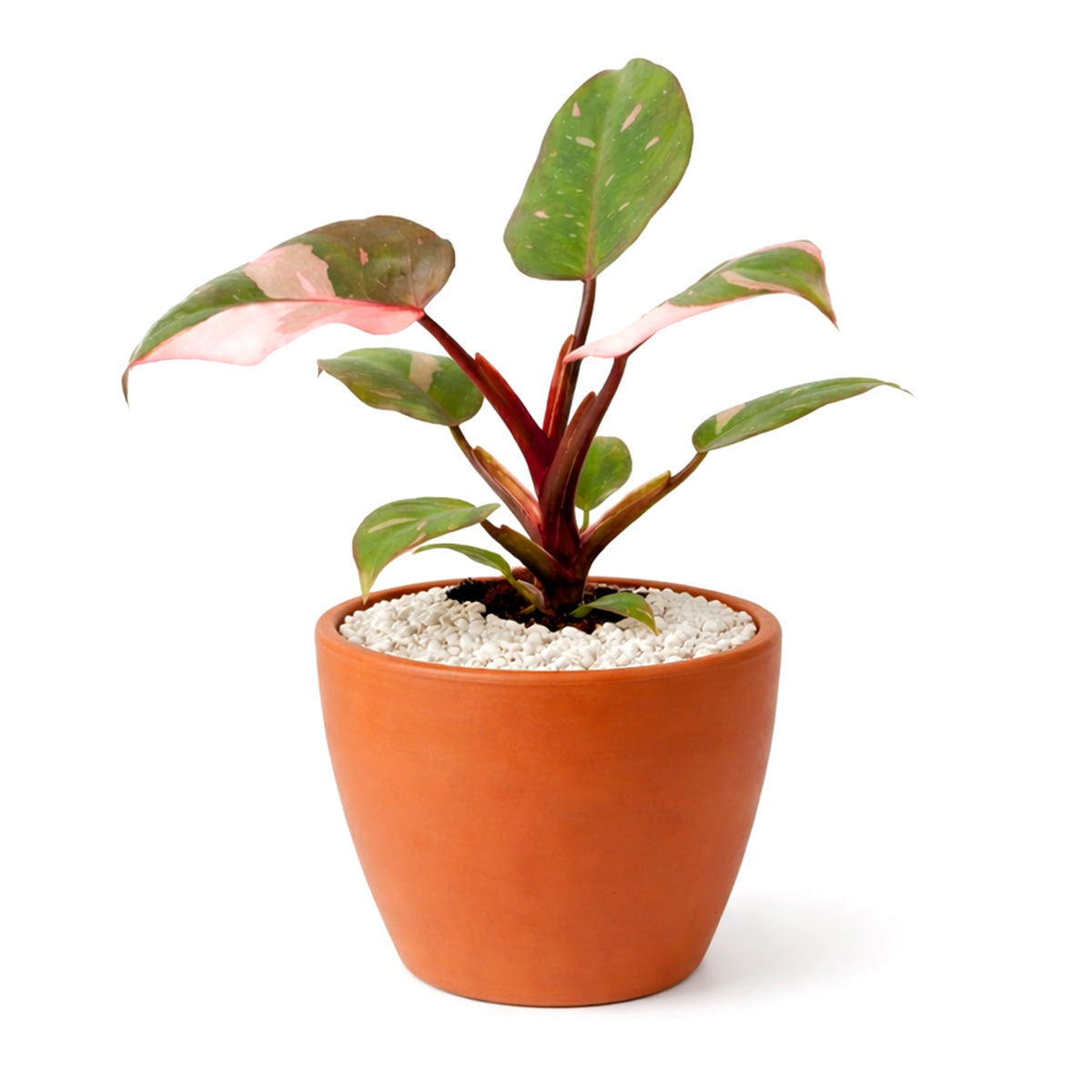


Philodendron 'Pink Princess'
Couldn't load pickup availability
-
![]() Philodendron 'Pink Princess' (Philodendron erubescens) is a rare variegated tropical houseplant native to the rainforests of Colombia and South America. This collector plant belongs to the Araceae family and has been selectively cultivated for its pink variegation.
 The leaves are deep burgundy-green with dramatic bubblegum pink variegation, and no two leaves are identical. Heart-shaped foliage reaches 4 to 5 inches wide on mature plants, with a slightly waxy texture and dark, almost black stems. It grows as a climbing vining plant that naturally reaches upward and benefits from a moss pole or trellis for structural support.
 It produces a spathe-and-spadix flower structure typical of aroids, though blooming indoors is uncommon. The plant actively filters formaldehyde and indoor toxins while naturally humidifying the air around it.
 Rotate Philodendron Pink Princess regularly for even, balanced growth, and avoid moving it frequently since it is sensitive to relocation. Move it outside to a sheltered spot during summer, but always provide cover from rain and bring it back indoors before temperatures drop. Keep it on a high shelf well out of reach of cats and dogs, as the sap causes skin and paw irritation. During summer months, it grows well in kitchens where ambient moisture supports its humidity needs.
-
 Philodendron 'Pink Princess' grows well in bright indirect light, away from direct south-facing windows that scorch its variegated leaves.
 Water it every 7 to 10 days, allowing the top inch of soil to dry between waterings, and ease off in winter.
 Philodendron Pink Princess does best in a chunky, well-draining mix of potting soil, perlite, and orchid bark to prevent root rot.
 It prefers temperatures between 65 and 85°F and should never be exposed to frost or cold drafts from air conditioning or heaters.
![]() Philodendron Pink Princess is a moderate grower that produces several new leaves per season. Feed it monthly in spring and summer with balanced liquid fertilizer to support pink variegation.
 It is hardy in USDA zones 9 through 11. It grows outdoors year-round in Florida, Hawaii, southern California, coastal Oregon, southern Texas, Arizona, Louisiana, Mississippi, Alabama, Georgia, and South Carolina. Residents of Nevada's warmer valleys and parts of New Mexico may also overwinter it outside with protection, though most growers outside these zones treat it as a container plant brought indoors each autumn.
Perfect For Every Occasion: housewarming, birthday party favor, bridal shower favor, Mother's Day, Valentine's Day, anniversary, graduation gift
What This Plant Symbolizes: love and romance, growth, resilience, good vibes, prosperity
A Thoughtful Gift For: your wife or girlfriend, mom or mother-in-law, a plant-loving friend, a coworker or boss, interior design enthusiasts
-
Q: How much light does Philodendron 'Pink Princess' need?
A: Place it near a window with bright indirect light, or 3 to 4 feet from a north or east-facing window. South-facing sun burns the pink variegation.
Q: Is this plant safe for pets?
A: Philodendron 'Pink Princess' should be kept on a high shelf away from cats and dogs. The sap causes skin and paw irritation if ingested or touched.
Q: How do I water Philodendron Pink Princess correctly?
A: Water it when the top inch of soil feels dry. Watch the leaves for wilting as a sign that watering is needed.
Q: How do I propagate this plant?
A: Philodendron Pink Princess propagates best from stem cuttings taken just below a node, rooted in water or moist sphagnum moss. Ensure the cutting has at least one leaf and some pink variegation for the best results.
Q: Why is Philodendron Pink Princess considered rare?
A: True pink variegation is genetically unstable and cannot be reliably reproduced at scale, making each plant unique. High collector demand combined with limited supply keeps it scarce.
Q: How fast does it grow?
A: Growth rate depends on conditions. Philodendron Pink Princess responds well to consistent humidity, bright indirect light, and monthly feeding during spring and summer, which supports healthy leaf development and color saturation.