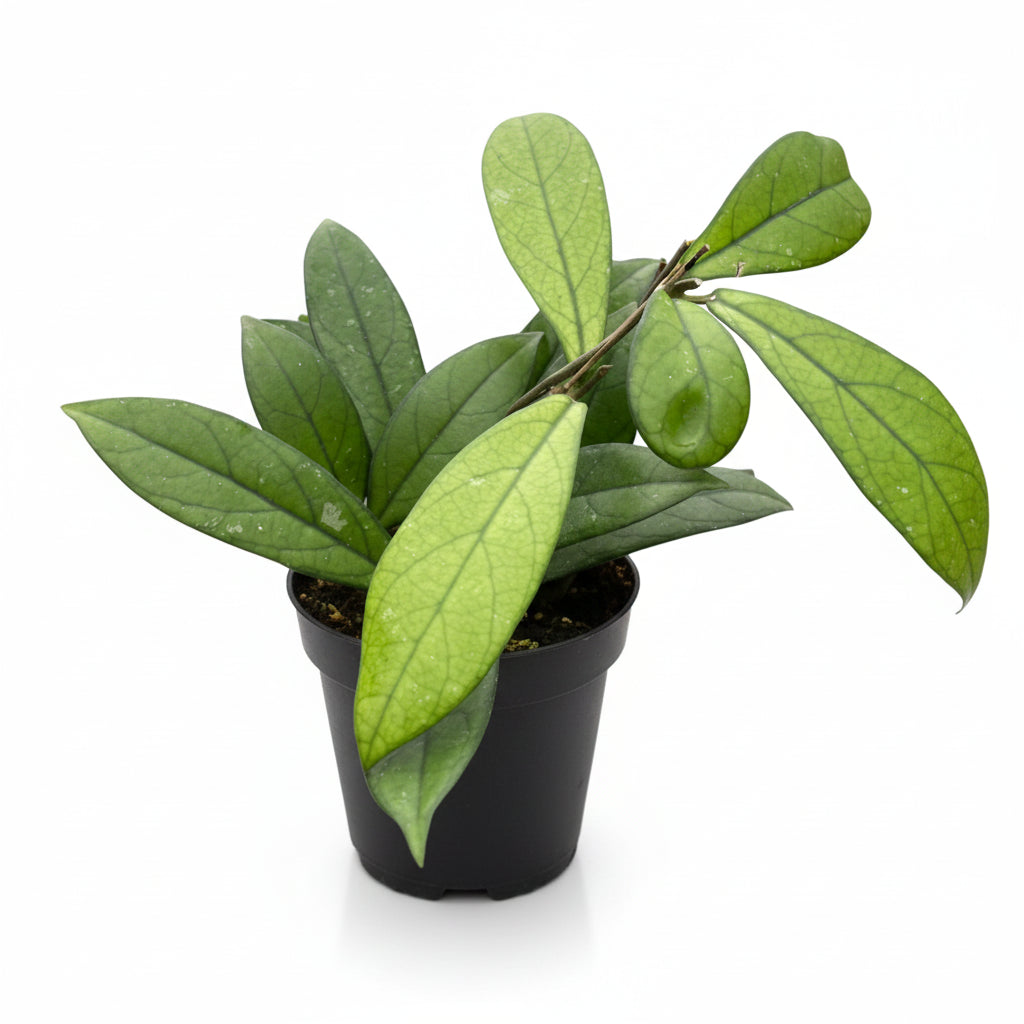


Hoya 'Crassipetiolata'
Couldn't load pickup availability
-
![]() Hoya 'Crassipetiolata' is a rare tropical wax plant from the family Apocynaceae, native to the Philippines where it grows as an epiphyte in warm, humid forest environments. It has earned a devoted following in the rare plant community for its distinctive appearance and trailing growth habit.
 Hoya Crassipetiolata produces thick, waxy, deep green leaves with a slightly quilted or puckered texture. The foliage is fleshy and robust, with a compact, rounded leaf shape that gives the vine a tidy appearance as it trails. Its cascading growth form suits hanging baskets, macrame hangers, and shelving displays equally well.
 It produces clusters of small, star-shaped flowers in the classic hoya umbel form, typically creamy to pinkish-white with a sweet, subtle fragrance. Blooms appear most reliably when the plant experiences a slight drop in nighttime temperatures, which signals the seasonal shift that triggers flowering. Keeping it slightly root-bound and allowing vines to mature undisturbed gives you the best shot at seeing those flowers appear.
 Hoya Crassipetiolata is a rare collector find that purifies indoor air, filtering formaldehyde and other household toxins. It is completely pet-friendly and safe around cats and dogs. You can display it confidently on a hanging hook or high shelf. It grows well near kitchen or bathroom moisture and loves the humidity those spaces naturally provide. Move it outside in summer to a sheltered, shaded spot. You can leave it up to ten days without water.
-
 Hoya 'Crassipetiolata' grows well in bright indirect light and will scorch in a south-facing window with intense direct sun.
 Water it every 7-10 days in spring and summer, allowing the top inch of soil to dry between waterings. Reduce watering to every 2-3 weeks in winter.
 Hoya Crassipetiolata prefers a well-draining mix of perlite, orchid bark, and potting soil to prevent root rot.
 It prefers temperatures between 60-85°F and should never be exposed to frost or temperatures below 50°F.
![]() Hoya Crassipetiolata is a moderate slow grower; feed it monthly in spring and summer with a balanced liquid fertilizer diluted to half strength.
 It is hardy in USDA Zones 10-11, where temperatures rarely dip below 30-35°F. It grows outdoors in southern Florida, Hawaii, coastal and southern California, southern Texas, and parts of Arizona. It can also grow outdoors in Louisiana, coastal Georgia, South Carolina, southern Mississippi, and Alabama with protection during brief cold snaps.
Perfect For Every Occasion: housewarming, new baby gift, congratulations gift, get-well gift, teacher appreciation, corporate or client gift, employee appreciation, anniversary
What This Plant Symbolizes: endurance, unwavering passion, resilience, higher knowledge, steady growth
A Thoughtful Gift For: a plant-loving friend, busy professionals seeking low-maintenance plants, those starting their plant collection, anyone who appreciates fragrant blooms, coworkers or mentors, plant collectors, families with pets or children
-
Q: Is Hoya 'Crassipetiolata' pet-friendly?
A: It is non-toxic and safe for cats and dogs.
Q: Why are the leaves turning yellow?
A: Yellow leaves on Hoya 'Crassipetiolata' are most commonly caused by overwatering, poor drainage, or low humidity. Check that the soil is not staying soggy and that it is not sitting near an air conditioning vent or heating source.
Q: How do I propagate Hoya Crassipetiolata?
A: Take a stem cutting with at least one node and one or two leaves, then root it in moist sphagnum moss or water in a warm, humid spot. Roots typically appear within 3-6 weeks.
Q: Can it grow outside in summer?
A: Hoya Crassipetiolata can move outdoors for summer in a sheltered, shaded spot but must be protected from direct rain, harsh sun, and any temperature drops below 50°F.
Q: How rare is Hoya Crassipetiolata?
A: It is a rare collector find and is not commonly stocked in mainstream garden centers.
Q: What window direction works best for light?
A: Hoya Crassipetiolata does best in bright indirect light away from south-facing windows where direct sun can scorch the leaves. East or north-facing windows work well, or place it a few feet from a bright window.