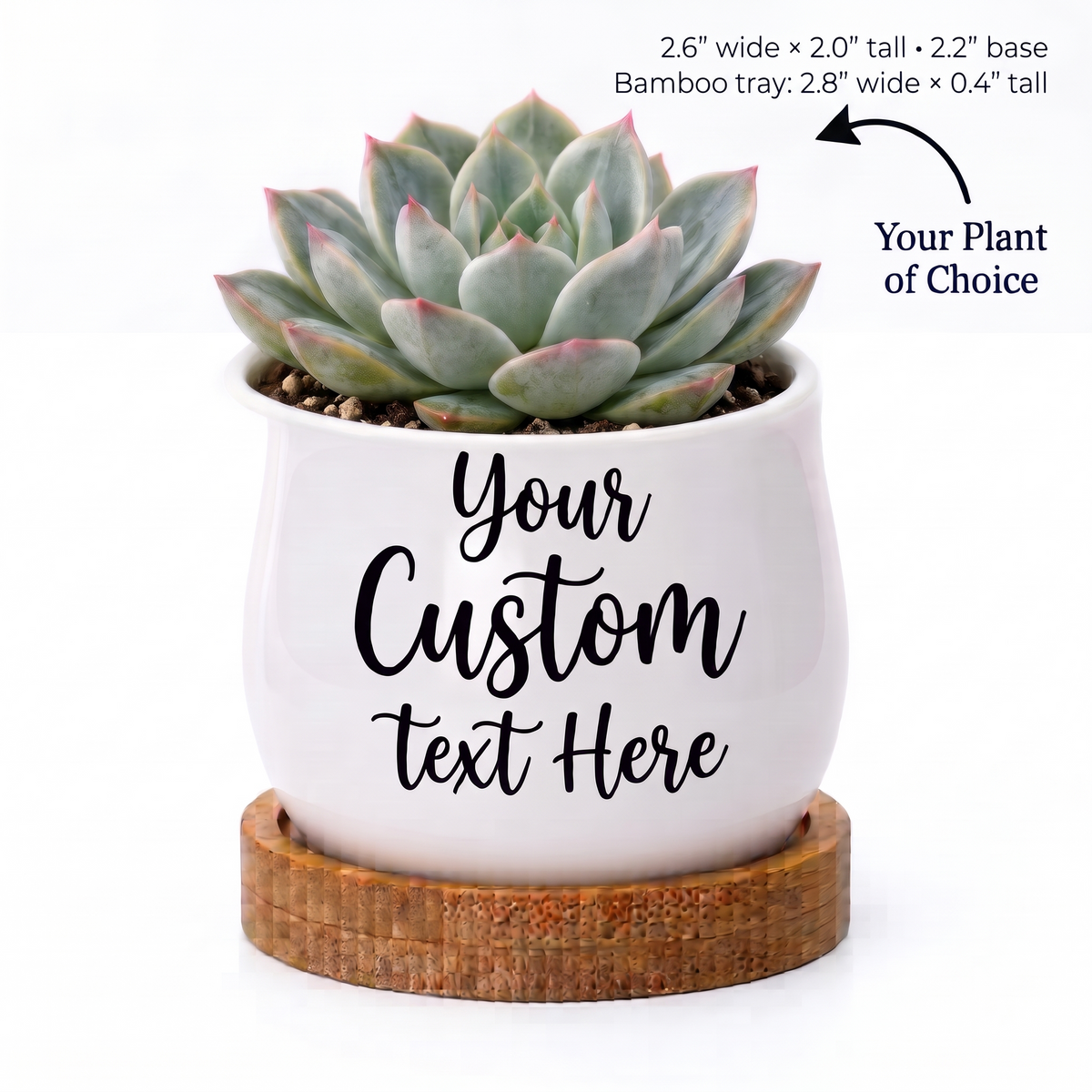


Echeveria Madiba
Couldn't load pickup availability
-
![]() Echeveria Madiba is a rosette succulent in the Echeveriaceae family, native to the semi-arid highlands of Mexico where it evolved to grow in bright sun and well-drained soils. A collector succulent and beginner-friendly plant, it belongs to the Echeveria genus, known worldwide for its architectural form and straightforward care.
 'Madiba' forms tight, symmetrical rosettes with fleshy, spoon-shaped leaves that radiate outward in layered patterns. The foliage catches soft silver-pink tones and subtle blush edges that deepen with sun exposure. As it matures, it clusters at the base, multiplying into full groupings that spread wider over time.
 'Madiba' produces slender arching stems tipped with bell-shaped blooms in warm coral and pink shades, appearing in late spring to summer when given the nighttime temperature drop that triggers flowering.
 You can leave it up to ten days without water. It grows well in dry heated indoor air and tolerates partial sun to full sun outdoors. Move it outside for summer in a bright spot with shelter from heavy rain, and bring it back inside before temperatures approach 40°F. 'Madiba' is non-toxic to cats and dogs, so you can display it anywhere in your home without worry.
-
 Echeveria Madiba grows well in bright indirect light to full sun, ideally four to six hours daily, though it may scorch in intense south-facing windows.
 Water it deeply every ten to fourteen days in summer, and cut back to once monthly in winter, letting soil dry completely between waterings.
 'Madiba' does best in a fast-draining cactus and succulent mix blended with perlite or coarse grit at a 50/50 ratio.
 It prefers temperatures between 65–80°F and should be brought indoors when temperatures drop below 40°F.
![]() 'Madiba' is a slow-growing rosette succulent that needs only a balanced diluted fertilizer once in spring and once in early summer.
 It is hardy in USDA zones 9 through 11, tolerating brief dips to around 25–28°F but growing best with frost-free winters. It grows outdoors year-round in California, Arizona, Texas, Florida, Hawaii, Nevada, Louisiana, Georgia, South Carolina, Alabama, and Mississippi. It also reaches into coastal areas of Oregon, parts of New Mexico, and the warmer pockets of North Carolina.
Perfect For Every Occasion: wedding favor, bridal shower favor, baby shower favor, birthday party favor, graduation gift, teacher appreciation, housewarming, thank-you gift
What This Plant Symbolizes: enduring love, resilience, adaptability, prosperity
A Thoughtful Gift For: your wife or girlfriend, mom or mother-in-law, a plant-loving friend, a coworker or boss, teachers and mentors, beginner plant parents, green-thumbed grandparents
-
Q: How often should I water Echeveria Madiba?
A: Every ten to fourteen days in the growing season, allowing the soil to dry completely before watering again. In winter, reduce to once a month.
Q: Is this succulent pet-friendly?
A: Echeveria Madiba is non-toxic to cats and dogs, so you can display it freely without concern.
Q: How much light does 'Madiba' need?
A: Four to six hours of bright indirect or full sun daily. Rotate it regularly so every side of the rosette grows evenly.
Q: How big does this plant get?
A: 'Madiba' typically reaches three to five inches across as a single head, then spreads wider as it clusters at the base over time.
Q: Can 'Madiba' be propagated easily?
A: Detach a healthy offset from the base of the mother plant, let it callous for a day or two, and pot it in dry succulent mix.
Q: Where can I grow this outdoors?
A: 'Madiba' grows outdoors year-round in USDA zones 9–11, including California, Arizona, Texas, Florida, Hawaii, and parts of the Southeast. Bring it indoors before frost in colder climates.