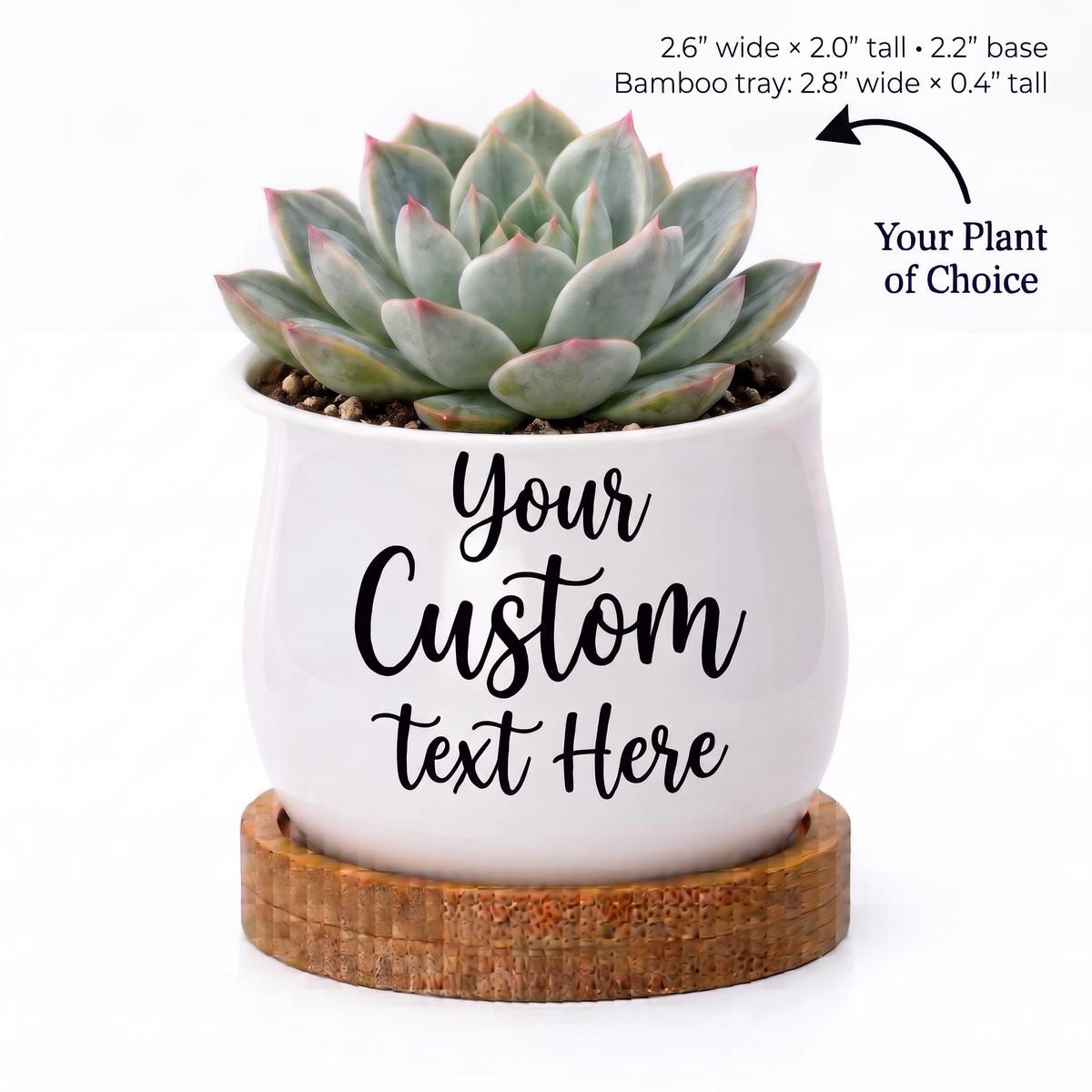


Echeveria 'Azulita'
Couldn't load pickup availability
-
![]() Echeveria 'Azulita' is a compact rosette-forming succulent in the family Crassulaceae, native to the semi-arid highlands of Mexico. It belongs to a genus of hundreds of species that have adapted to survive in rocky, dry terrain with intense sunlight and fast-draining soils.
 The leaves are spoon-shaped and tightly arranged in a symmetrical rosette, covered in a powdery blue-grey farina that gives 'Azulita' its signature powdery blue tone. Leaf tips blush faintly pink or lavender when exposed to bright light. The farina coating is natural and will smudge if touched, so it works best handled from the base.
 'Azulita' produces slender arching stems in spring or early summer, tipped with small coral-to-orange bell-shaped flowers. A nighttime temperature drop in late winter encourages it to set flower buds. As it matures, it offsets freely, forming a cluster of small rosettes around the mother plant.
 Move it outside for the summer months, but keep it sheltered from direct rainfall, as sitting moisture on the farina and in the rosette centre can cause rot. Rotate the pot every few weeks so all sides receive even light exposure. You can leave it up to ten days without water, and it tolerates the dry heated air common in most homes. This plant is pet friendly.
-
 Echeveria 'Azulita' grows best in bright indirect light to partial direct sun, about four to six hours daily.
 Water it thoroughly every ten to fourteen days, allowing the soil to dry out completely between waterings.
 'Azulita' does best in a gritty, well-draining mix, such as cactus soil blended with perlite at a 1:1 ratio.
 It prefers temperatures between 60°F and 80°F and should be protected from frost below 40°F.
![]() 'Azulita' is a slow-growing succulent; feed it once in spring and once in summer with a diluted, balanced liquid fertilizer.
 It is hardy in USDA zones 9b to 11b, tolerating brief dips down to around 25°F to 30°F in sheltered spots. It grows outdoors year-round in California, Arizona, Nevada, Texas, Louisiana, Florida, Georgia, South Carolina, and Hawaii. It also grows outdoors in parts of Oregon, Alabama, Mississippi, and New Mexico where winters stay mild.
Perfect For Every Occasion: housewarming, birthday gift, thank-you gift, hostess gift, just because, holiday or stocking filler, congratulations
What This Plant Symbolizes: resilience, enduring beauty, peace, good vibes
A Thoughtful Gift For: a plant-loving friend, a coworker or boss, teachers and mentors, green-thumbed grandparents, anyone needing a touch of tranquility
-
Q: How much light does Echeveria 'Azulita' need indoors?
A: A south- or east-facing windowsill works well. In a south window with intense afternoon sun, the farina can scorch and the leaf tips may bleach white rather than blush pink, so a few inches back from the glass is safer in peak summer.
Q: Is this succulent safe for cats and dogs?
A: Echeveria 'Azulita' is non-toxic and pet friendly, so it is safe to keep in homes with cats and dogs.
Q: Does 'Azulita' produce offsets?
A: It does. Small rosette offsets appear around the base of the mother plant as it matures, and these can be gently separated and potted individually once they are at least a centimetre across.
Q: What happens if I overwater this succulent?
A: 'Azulita' will show soft, translucent, or mushy leaves near the base when it has had too much water. At that point, unpot the plant, let the roots air dry, and remove any rotted roots before repotting into fresh dry mix.
Q: Can 'Azulita' survive while I'm away on a trip?
A: It can go up to ten days without water, so a standard one- to two-week absence is fine without any special prep.
Q: Does this plant need to be rotated?
A: 'Azulita' leans toward its light source over time, so turning the pot a quarter turn every week or two keeps the rosette growing symmetrically.