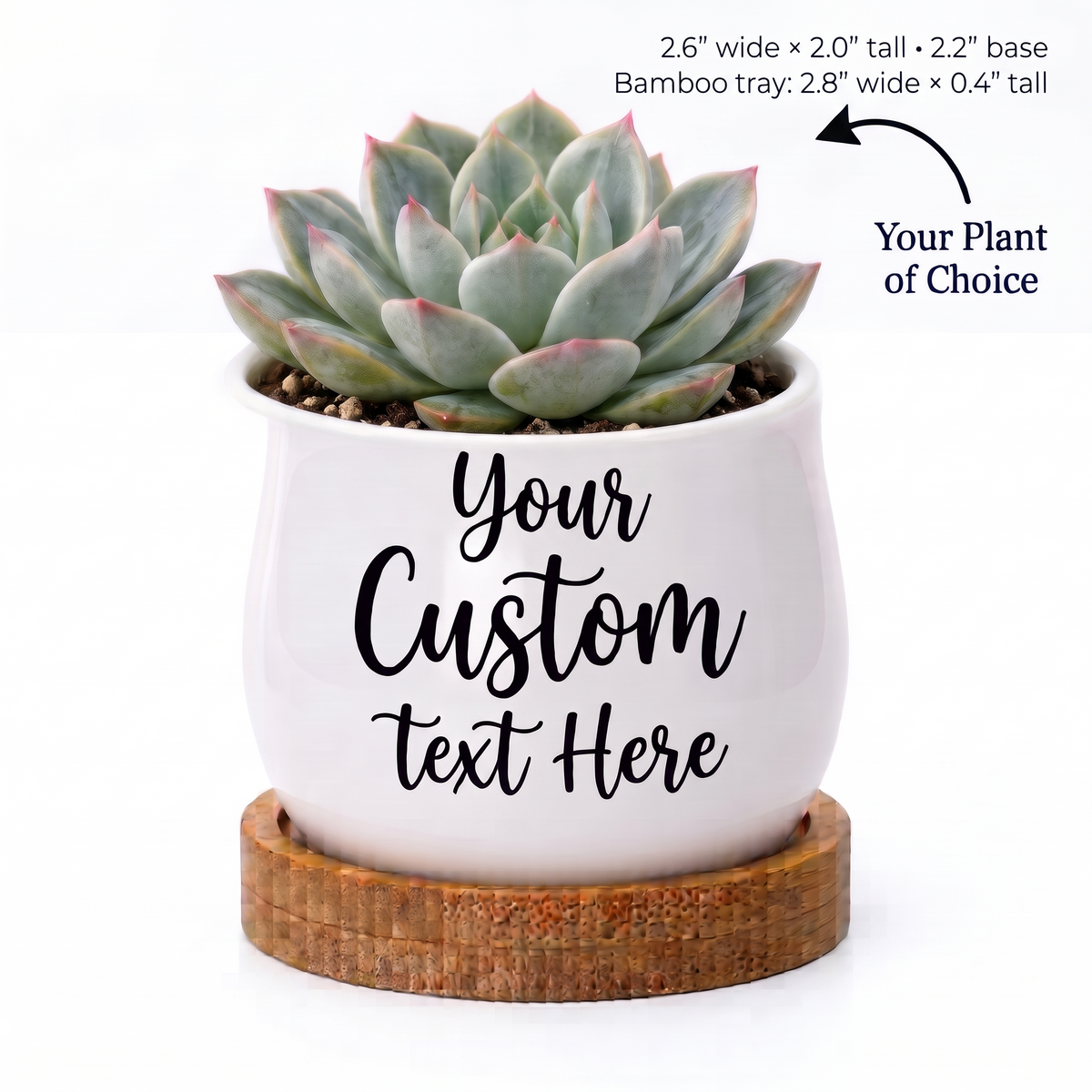


Chick Charmlettes Ollie Oddball
Couldn't load pickup availability
-
![]() Chick Charmlettes Ollie Oddball (Sempervivum 'Ollie Oddball') is a compact rosette-forming succulent in the Crassulaceae family, native to the mountains of Europe and western Asia where it grows in rocky, well-drained soils. It belongs to the hens and chicks group, a cold hardy houseleek valued for its tight, symmetrical growth and ability to multiply by producing small offsets around the mother plant.
 The rosette is dense and low-growing, with pointed, fleshy leaves that fan outward in a neat, layered form. Leaf color shifts depending on sun exposure, ranging from green with bronze or reddish tips in moderate light to deeper burgundy-red tones in full sun. The leaf edges carry fine cilia, giving the rosette a slightly textured look around its perimeter.
 Like other sempervivums, 'Ollie Oddball' produces star-shaped flowers on a tall stalk once the mother rosette matures, typically in summer. The blooms are small and appear in clusters, usually in pink or reddish tones. After flowering, the mother rosette dies back, but the surrounding offsets continue growing and fill in the space.
 Keep 'Ollie Oddball' covered during prolonged rain, as sitting water in the rosette can cause rot. It handles dry, heated indoor air without trouble and tolerates low-light conditions, though it produces its best color in direct sun. You can leave it up to ten days without water, and it moves outdoors easily in summer or stays out through autumn. This plant is pet friendly, though it does produce pollen that may affect allergy-sensitive individuals.
-
 Chick Charmlettes Ollie Oddball grows well in direct sun to partial sun and also tolerates low-light indoor conditions.
 Water it every 10 to 14 days during the growing season, allowing the soil to dry completely between waterings.
 'Ollie Oddball' does best in a gritty, well-draining cactus or succulent mix with added perlite or coarse sand.
 It handles temperatures as low as 20°F, tolerating frost without protection once established in the ground.
![]() 'Ollie Oddball' is a slow to moderate grower; feed it once in spring with a diluted, low-nitrogen fertilizer.
 It is hardy in USDA zones 3 through 8, surviving winter lows down to around -40°F in the coldest zones. It grows outdoors year-round in states including Minnesota, Wisconsin, Michigan, New York, Pennsylvania, Ohio, Colorado, Oregon, Washington, and most of the central and northeastern United States. It also performs well outdoors in parts of California, Utah, Montana, Idaho, and the Carolinas.
Perfect For Every Occasion: wedding favor, bridal shower favor, baby shower favor, birthday party favor, graduation gift, teacher appreciation, housewarming
What This Plant Symbolizes: resilience, endurance, growth, good luck
A Thoughtful Gift For: your wife or girlfriend, mom or mother-in-law, a plant-loving friend, a coworker or boss, teachers and mentors, green-thumbed grandparents
-
Q: Is Chick Charmlettes Ollie Oddball safe for cats and dogs?
A: Yes, it is non-toxic and pet friendly for both cats and dogs.
Q: How do I know if I'm overwatering this succulent?
A: Chick Charmlettes Ollie Oddball will show soft, mushy leaves or a blackening base when it receives too much water, especially if drainage is poor.
Q: Can 'Ollie Oddball' stay outside during autumn?
A: Yes, it handles autumn temperatures without issue and can remain outdoors until hard frost sets in.
Q: Which window direction works best for this plant indoors?
A: 'Ollie Oddball' does well in a south or west-facing window where it receives several hours of direct light; in a south-facing window, watch for leaf scorch on the tips during peak summer heat.
Q: How does 'Ollie Oddball' spread or multiply?
A: It produces small offsets, called chicks, around the base of the mother rosette; these can be gently separated and replanted once they are a few centimeters across.
Q: Can this succulent handle being left alone during a vacation?
A: 'Ollie Oddball' can go up to ten days without water, and its drought tolerance means brief absences in a moderate indoor environment are not a problem.