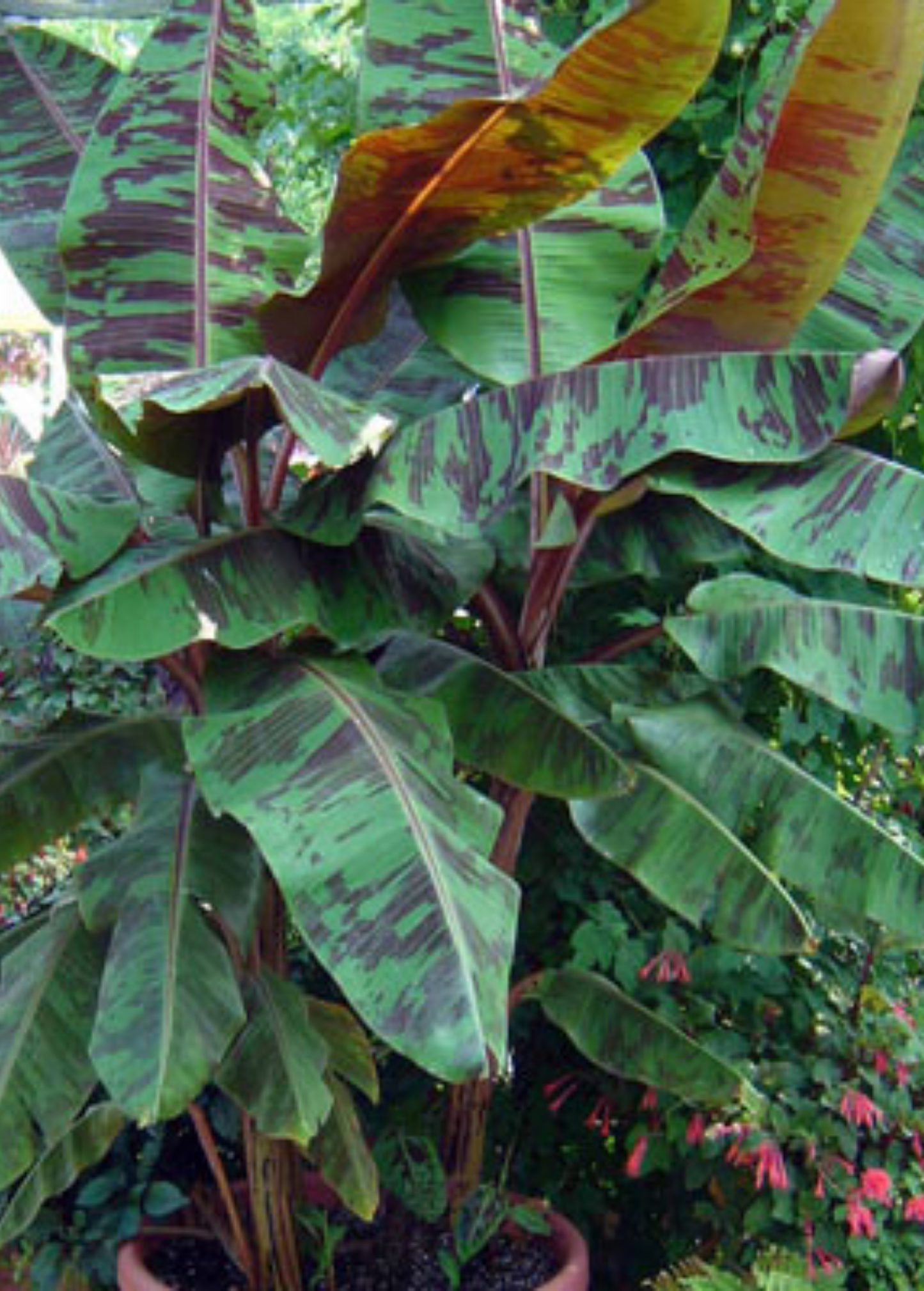


Blood Banana (Musa acuminata var. zebrina)
Couldn't load pickup availability
Striking Ornamental Banana with Edible Fruit
Common Names: Blood Banana, Red Banana, Zebrina Banana
Family: Musaceae
Origin: Southeast Asia
The Blood Banana (Musa acuminata var. zebrina) is a stunning ornamental banana plant known for its large, vibrant green leaves streaked with deep red and purple hues, making it a striking addition to any tropical garden or landscape. While primarily grown for its striking foliage, this banana variety also produces small, edible bananas, though they are primarily enjoyed as an ornamental plant due to the fruit’s seedy texture. Native to Southeast Asia, Blood Banana thrives in warm, tropical environments and brings an exotic flair to both gardens and indoor spaces when grown in containers.
Distinctive Features, Uses, and Ornamental Value
Fruits: Blood Bananas produce small, edible bananas that are sweet but contain numerous seeds, making them more suitable for ornamental use rather than large-scale consumption. The fruit is typically enjoyed fresh or used in local culinary dishes in its native regions, though the plant's true value lies in its ornamental appeal.
Foliage: The large, paddle-shaped leaves of the Blood Banana are its most striking feature. The leaves are bright green with dramatic streaks of dark red and purple, creating a bold contrast that stands out in any garden or container setting.
Growth Habit: Blood Banana is a fast-growing, herbaceous perennial that typically reaches 6-10 feet tall, depending on its growing conditions. It can be grown outdoors in warm climates or as a container plant in cooler regions, making it highly versatile.
Ornamental and Edible Uses
Blood Banana is often used as a showpiece plant in tropical landscapes, container gardens, or as a statement indoor plant due to its eye-catching foliage. Its bold colors and fast growth make it a favorite for adding a lush, tropical vibe to gardens. The plant does produce small, edible bananas, though they are filled with seeds and are not commonly grown for fruit production.